DealTokyo
Tokyo, from the stations this guide is built on

Ride Tokyo

What to see at each of 1,343 stations · 13 subway lines, 16 JR and 76 more

Places worth the stop

Six of the 146 photographed sights here — each one a walk from the station it sits under.

Japan, briefly

Tokyo mats are smaller than Kyoto ones

Rooms here are counted in tatami, and the mat is not one size. Kyoto carpenters fixed the spacing between pillars first and cut mats to fill it — about 190 by 94.5 centimetres. Tokyo carpenters measured from the centre of one pillar to the centre of the next, so the mat became whatever was left over.

Omotesenke Fushin’an

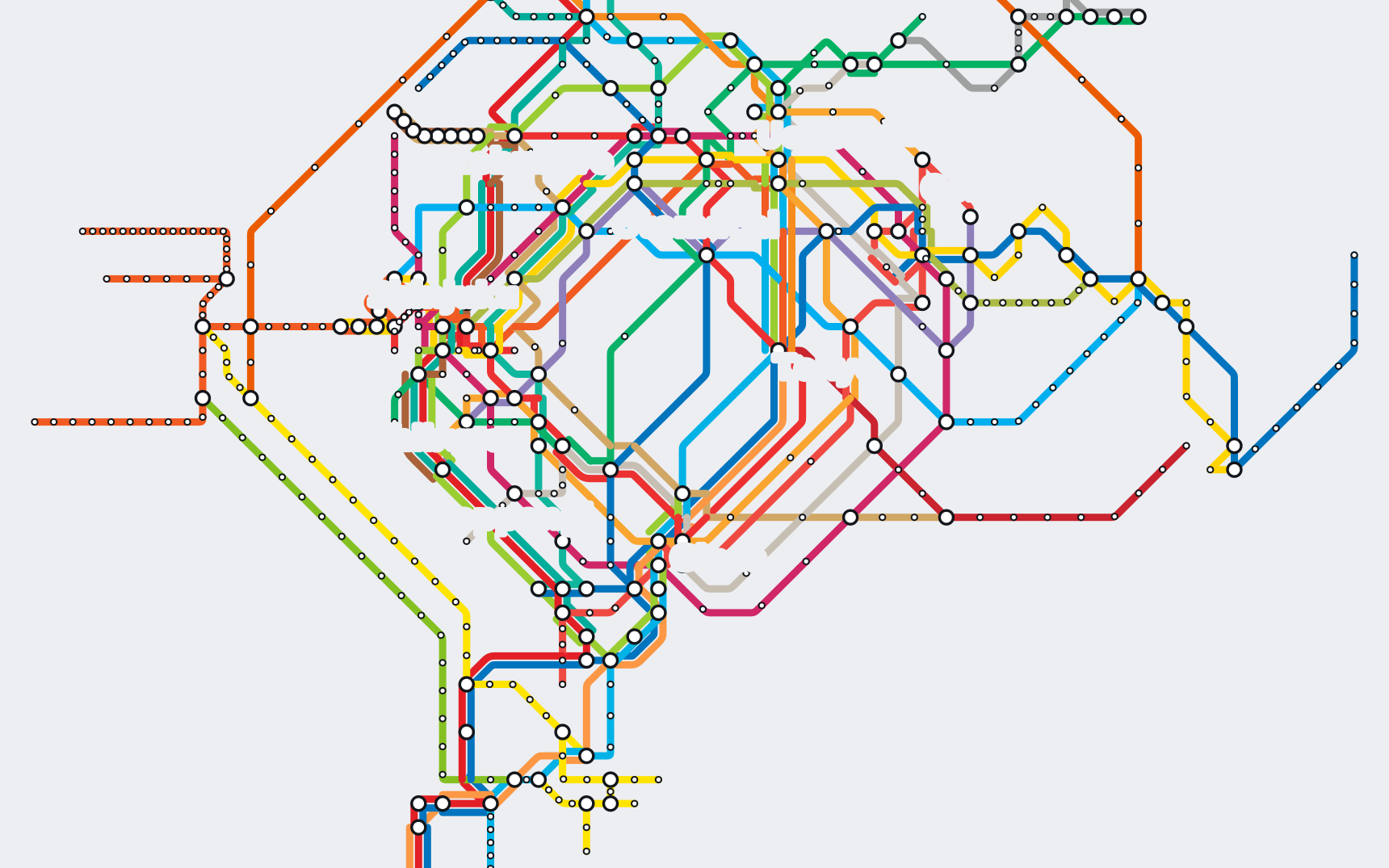
All 105 lines

Open the line map →
Tokyo Metro 9 lines · 185 stops

Above: a Tozai Line 15000 series — Tokyo Metro’s busiest line, 488.7 million riders in the year to March 2026 by the operator’s own count (FACT BOOK 2026).

Toei 4 lines · 106 stops

Above: an Oedo Line 12-600 series bound for Roppongi — Toei’s busiest line, 306 million riders in the year to March 2024 (Tokyo Statistical Yearbook, CC BY).

JR East 16 lines · 417 stops
Not on the Tokyo Subway Ticket

JR East is a different railway from the subway. Tokyo Metro and Toei run the subway; JR runs its own lines across and around it, mostly above ground.

Your Suica or PASMO works on both. Tap in and out the same way and the right fare is taken, so an IC card is the simplest way to move between the two.

Paper subway tickets and subway day passes are not accepted, and a journey that uses both railways pays a subway fare and a JR fare rather than one combined fare.

Above: a Yamanote Line E235, the loop through the city’s biggest hubs — its own front display names the line.

Private railways 76 lines · 1,018 stops

Separate fare from the subway and JR

Above: two private railways nose to nose — a Tokyu 5050 beside a Tobu 50050. These companies reach the map from every direction.

About DealTokyo

Tokyo runs on rails, and a visitor's practical decisions happen at a station: which way out, whether the last train has gone, what is worth stepping out for. DealTokyo gives every one of 1,343 stations on 105 lines its own page, and answers those questions wherever the answer can be verified.

Everything here is anchored to the station you would actually walk from — not a district, not a pin on a map. Where we hold them, a station page carries its exits, its first and last trains, step-free access and coin lockers; where we do not, it says so and says why. Around that sit a route planner, live weather, air quality and yen rates, and a festival calendar for the whole year.

Facts are read from operators’ own pages and official open data, then written fresh in our own words. What could not be verified is left blank, not guessed.

Two of those sources are Tokyo’s own: the city’s seasonal guides behind our festival calendar, and its official visitor guide behind most of the sights. Not all of them — the stations we researched ourselves say so on their own pages. Every source, named →